The goal
I went into the OC Marathon with one number in my head: 3:30.
Under that, and I would have accomplished what I set out to do.
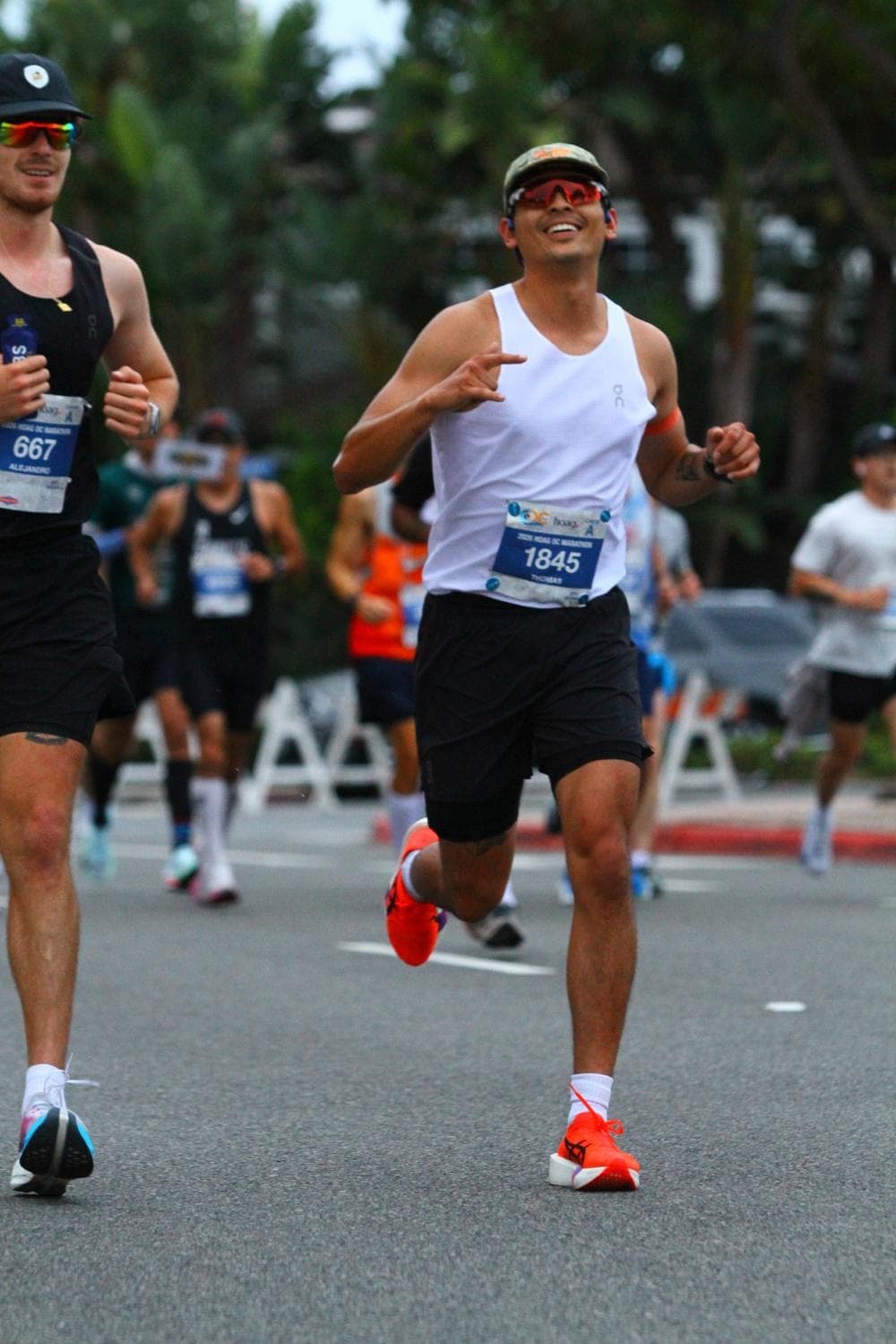
This was my first marathon, so there was still a huge amount I didn't know. My training had been consistent, but relatively modest. Most of my miles were comfortable. A lot of the work happened around Zone 2, and midway through the build I raced the SF Zoom Half Marathon partly to get another taste of a race environment before OC.
I knew I had covered the miles. I didn't know what would happen when I tried to race all 26.2 of them.
The nerves finally showed up
The day before the race was intentionally uneventful.
We stayed at the house, watched shows, stayed off our feet, rolled out, stretched, and talked. I spoke with my parents about their own marathon experiences. That night we went to an Italian restaurant in El Segundo and loaded up on carbohydrates.
Then the expo came around, and that was when it started feeling real. I could feel the nerves creeping in. Not because I thought I hadn't prepared, but because there was no way of knowing exactly what was waiting for me.
Fortunately, I wasn't doing it alone.
Several of my friends racing OC were former teammates of mine from Dominican University. Being around them gave the weekend a strangely familiar feeling. It reminded me of traveling for a soccer tournament: everyone together, everyone preparing for the same thing, everyone knowing that when it started, we were going to compete.

3:00 A.M.
Race morning started at three.
Shower. Toast with jam and butter. Espresso. Water. Roll out. Stretch. Music. Then we headed for the start.
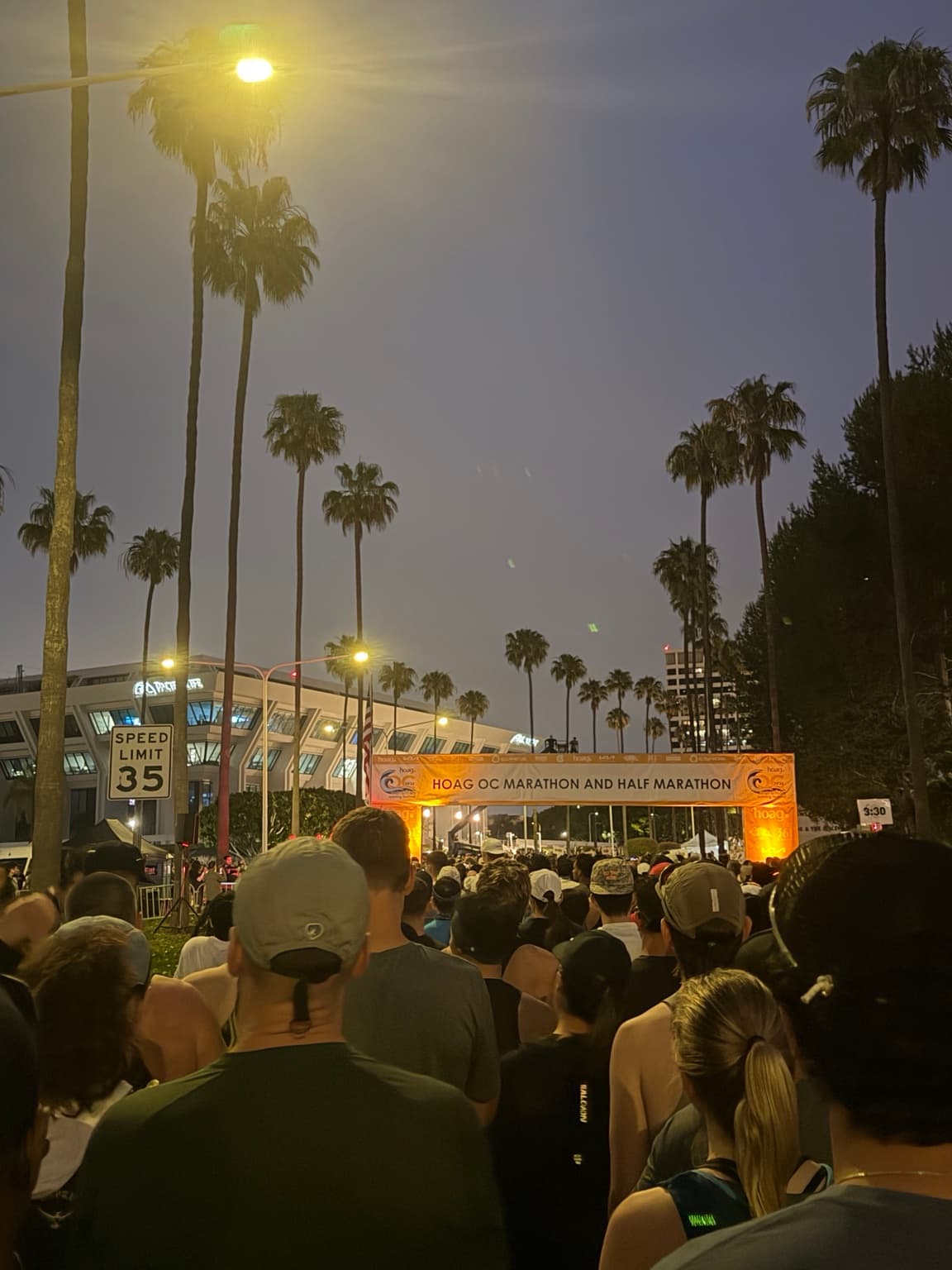
It was still dark outside. Cold. There was moisture in the air, almost like dew.
The start area was completely alive. Thousands of people talking, moving, warming up and waiting for the gun. Then the race began, and all that noise seemed to collapse into the sound of thousands of footsteps moving in the same direction.
Now there was nothing left to think about. It was time to run.
We were not running eight-minute miles
Throughout training, I had become very comfortable around eight minutes per mile.
That seemed sensible.
Then I talked to my friends.
Eight-minute pace was apparently not going to be the plan.
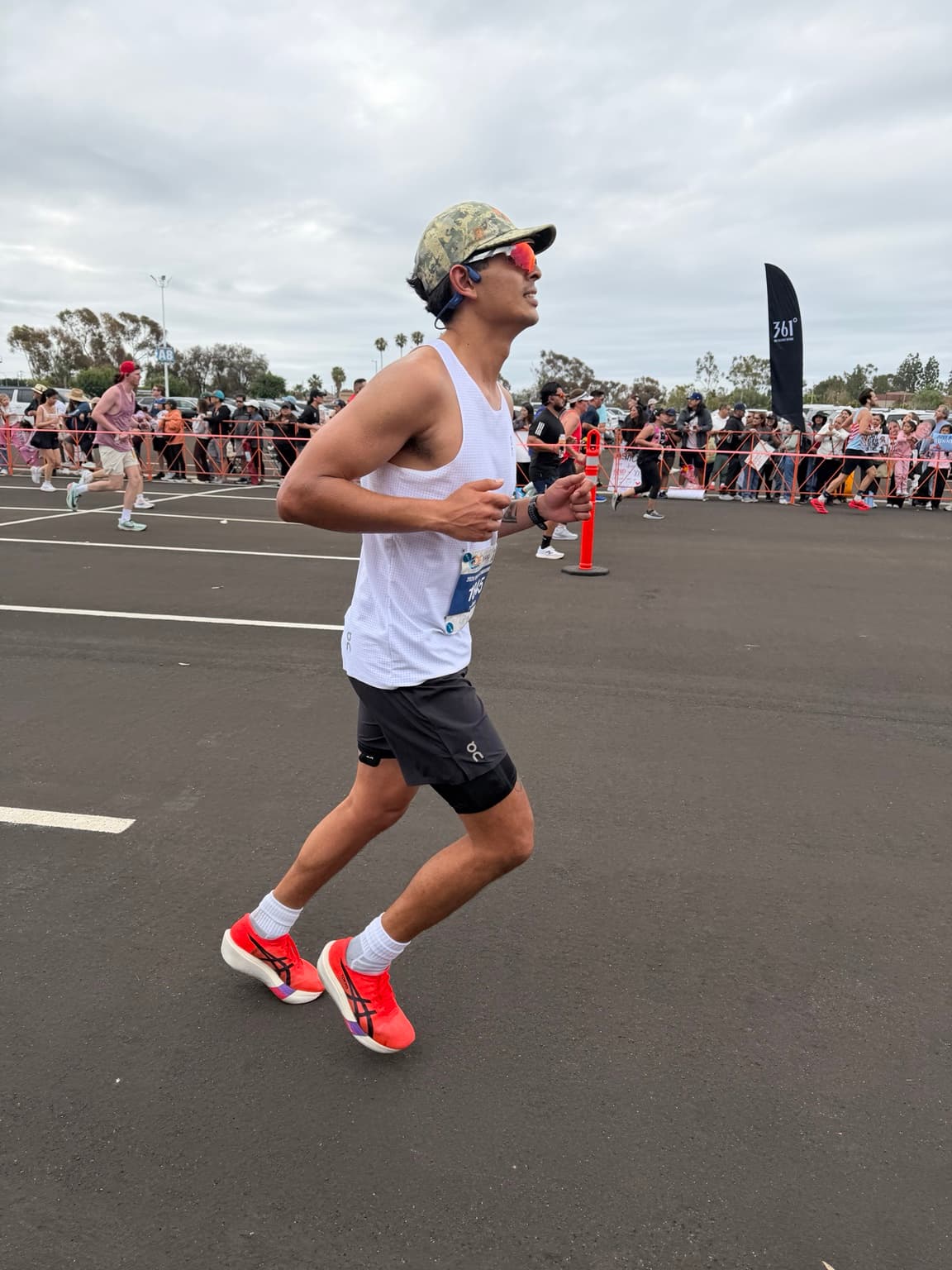
We averaged roughly 7:35 per mile over the opening four miles. And I felt great.
That was the dangerous part.
I wasn't hanging on. I wasn't wondering whether we were making a mistake. I felt fast, capable and completely in control.
Around 10K, I was running approximately 7:30 pace and hit what was a personal best for me at the distance. I still felt good. So we kept going.

Halfway
The half-marathon point might have been the strongest I felt all day.
I had spent the first half running around 7:30 pace, surrounded by guys I had competed alongside for years.
I felt like I was flying.
There is a specific kind of confidence that comes from reaching halfway through a marathon feeling that good.
There is also a problem with it: you still have another half marathon to run.
And I hadn't learned yet how quickly a marathon can change.
Mile 18
Around mile 18, the race started asking different questions.
First there was a strange pain along the outside of my foot. Then my left hamstring started cramping.
My friends kept moving. I couldn't.
That was the point where the race changed from running with the group to dealing with the marathon by myself.
I would stop briefly and stretch. Start running again. Find another wind. Keep moving. Then repeat the process.
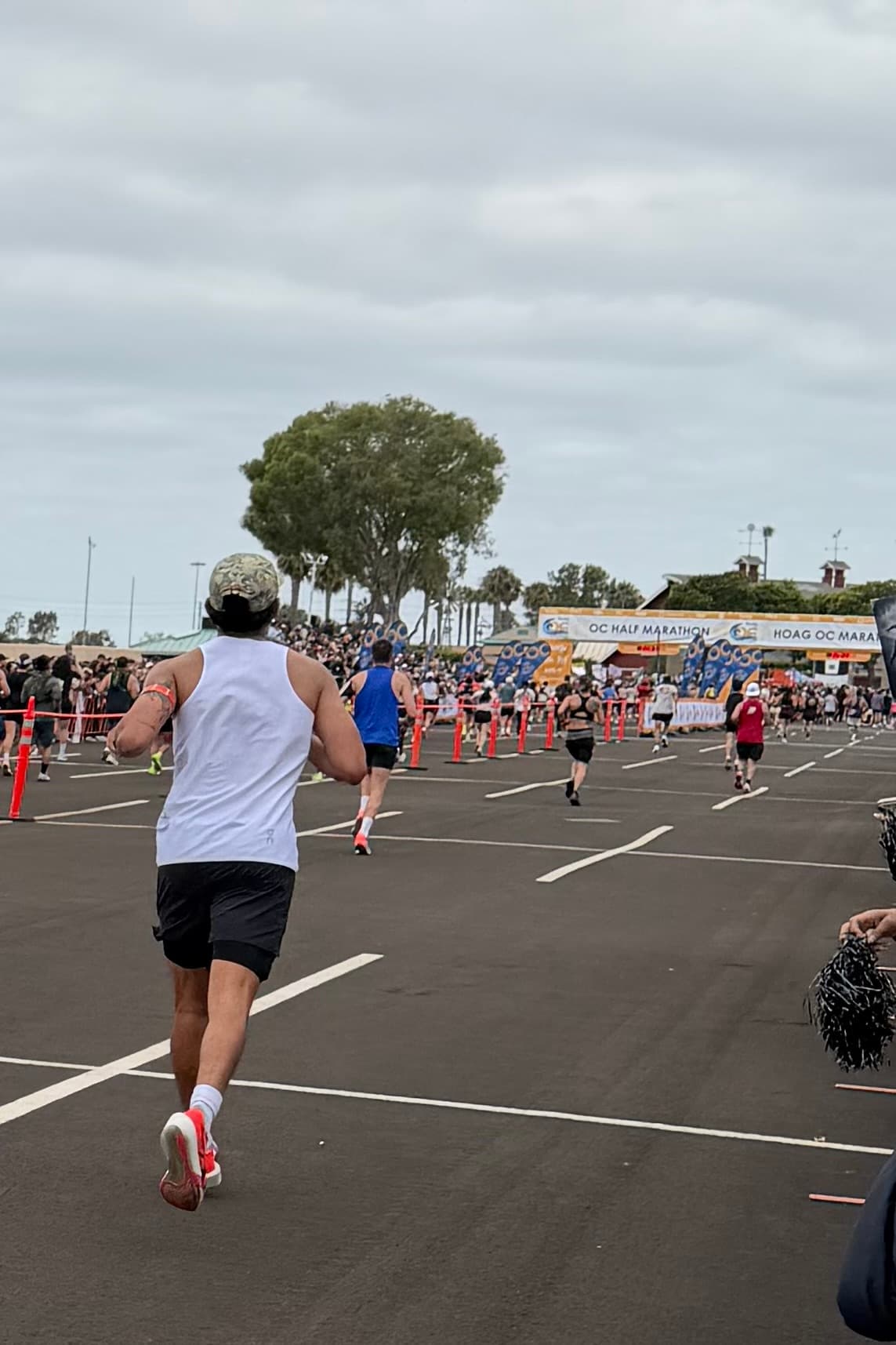
From mile 18 to the finish, I was in the cave. The objective became simple: get it done.
The effort was still there. My legs simply weren't giving me the same return anymore.
Burning matches
Looking back, I don't think the cramps were simply a hydration or sodium problem.
I think fatigue was a major part of it. I had burned a lot of matches.
The early pace felt comfortable enough that I was willing to spend them. The hills added another cost. And when I had to keep climbing after fatigue had accumulated, I didn't yet have the strength or marathon-specific preparation to handle it particularly well.
Fitness can make a pace feel possible. That doesn't necessarily mean you've earned the right to hold it for 26.2 miles.
There's a difference between being fit enough to run fast and being prepared enough to race a marathon well.
I was beginning to understand that difference in real time.

3:28:48

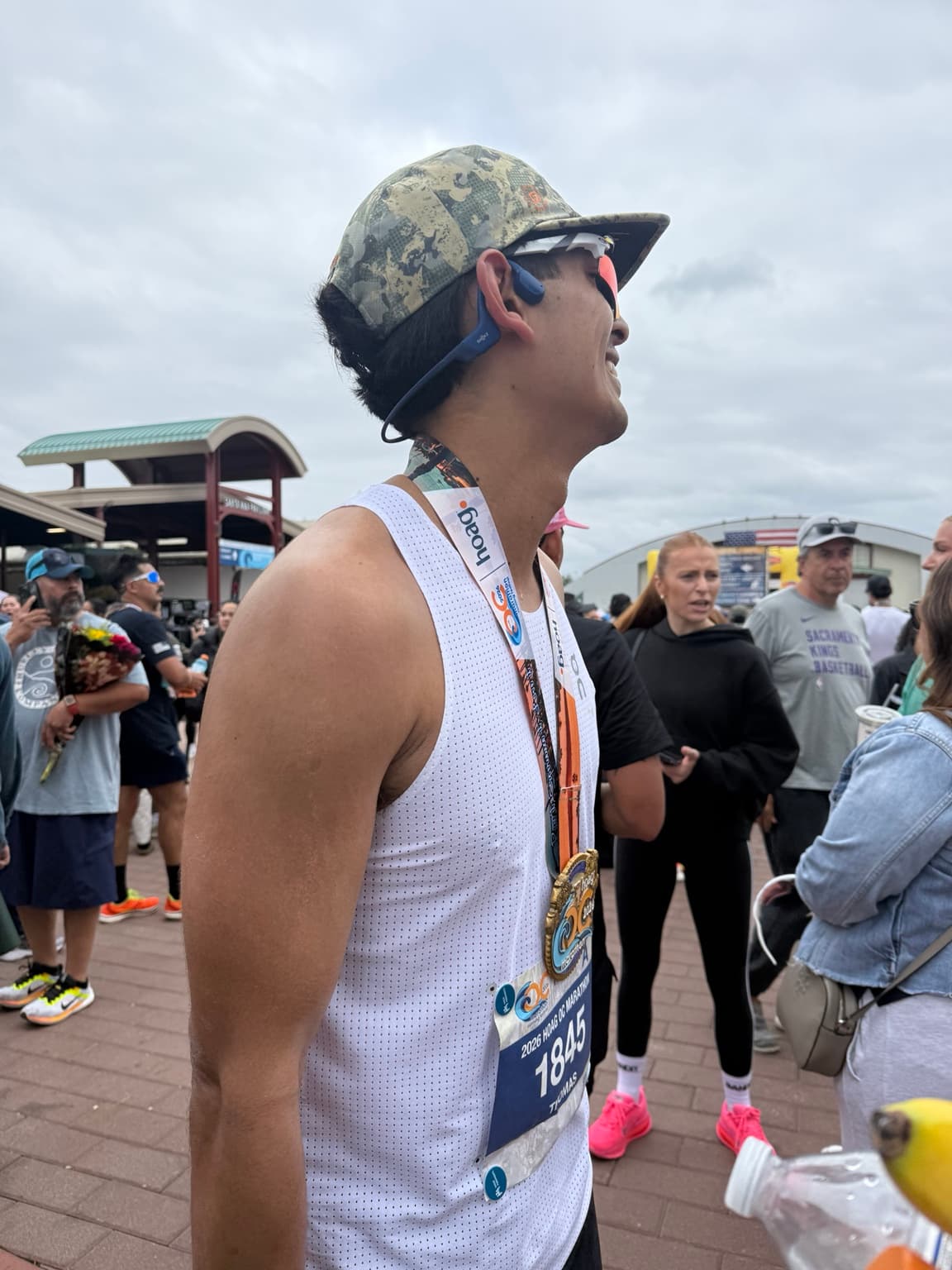
Crossing the finish line produced a sequence of emotions.
First: Thank God that's over.
Then: Wait. I actually just did that.
And then I saw my family.
That was when it really hit me.
I had run my first marathon. I had broken 3:30.
Everything I had originally set out to accomplish, I had accomplished.
And somehow I wasn't satisfied.
Not because 3:28 wasn't good enough. Because almost immediately, I could see ways I could be better.
Better training. Better preparation. Better strength late in the race. Better understanding of pacing. Better at the marathon itself.

The beginning, not the finish
The biggest thing OC taught me is that I have so much more to learn.
That's exciting.
Running the marathon didn't scratch something off a bucket list. It did almost the opposite. It opened something.
My friends were going to keep pushing themselves. I knew I would too.
There would be faster races. Different races. Trails. Mountains. Another marathon. Maybe much more than that.
I crossed the line at OC having accomplished the goal I showed up with.
But I left with a much larger one.
Curiosity for what’s possible.
And 3:28:48 was only the starting point.